 |
|
Most boats under 65 feet don’t legally need an installed toilet at all — but if you carry passengers for more than a couple hours, you’ll want one anyway, and a portable toilet is almost always the easiest way to get compliant and comfortable. Federal law only regulates toilets that are permanently installed and plumbed into the boat. Portable units are treated differently, which is exactly why they’re the go-to fix for most recreational boaters.
Here’s what the rules actually say, where the gray areas are, and how to set up a simple, sanitary bathroom solution on board without touching plumbing.
Do You Legally Need a Toilet on Your Boat?
The federal Clean Water Act doesn’t require recreational boats to have a toilet installed. It only kicks in once you’ve installed one — at that point, it must be connected to a Coast Guard-certified Marine Sanitation Device (MSD). There are three types: Type I and II treat sewage before discharge, and Type III is a holding tank that stores it for pump-out on shore.
States can add their own rules on top of the federal baseline. Florida, for example, requires any vessel 26 feet or longer with an enclosed cabin and sleeping space to have a toilet on board, and it can be either portable or a permanently installed unit connected to an MSD. Other states set similar thresholds, so it’s worth a quick check of your home state’s boating law if you’re near that size.
Here’s the part boaters often miss: a portable toilet isn’t classified as an “installed” toilet under the law, so it isn’t subject to MSD certification at all. That means you can legally carry one on almost any boat, of almost any size, without a permit, a plumbing install, or an inspection.
Why a Portable Toilet Is the Simplest Way to Comply
Installing a Type I or II MSD means cutting into your hull for through-hull fittings, running hoses, and maintaining a treatment system that can fail at the worst possible moment. A Type III holding tank avoids the treatment hardware but still needs a pump-out station, tank monitoring, and regular maintenance to keep it from backing up.
A portable toilet skips all of it. There’s nothing to install, nothing to plumb, and nothing that can leak into the bilge. You set it up when you need it, use it, and stow it in a dry compartment the rest of the trip.
This matters most on center consoles, bay boats, and smaller cruisers that were never built with plumbing in mind. Adding a full MSD to a boat like that usually costs more than the boat’s next few seasons of use are worth. A folding portable toilet paired with sealed waste bags solves the same problem for a fraction of the cost and zero permanent modification.
Where You Can — and Can’t — Dispose of Waste on the Water
This is the rule that trips up boaters who assume a portable toilet means “dump it over the side.” It doesn’t, and doing so can carry real fines.
- Within 3 nautical miles of shore: discharging any sewage, treated or not, is illegal.
- The Great Lakes and most inland rivers: discharge is prohibited regardless of distance from shore.
- No Discharge Zones (NDZs): many bays, harbors, and inland lakes are federally or state-designated no-discharge areas, where even treated Type I/II effluent can’t be released.
- Beyond 3 miles offshore: treated discharge from a certified MSD is generally allowed; raw sewage still isn’t.
A portable toilet using sealed, gelling waste bags sidesteps this whole issue. Once a bag is used and sealed, it goes into a regular trash receptacle at the dock or marina — no pump-out station, no holding tank to track, no risk of accidentally discharging in a zone you didn’t realize was restricted.
Choosing the Right Setup for Your Boat
The right setup depends mostly on boat size and how often you’re out.
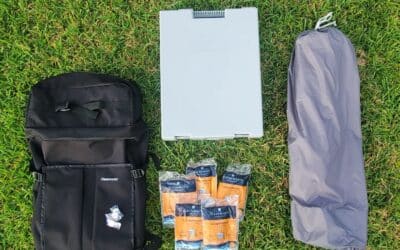
Center consoles and day boats: A compact WAG Bag kit stored in a dry hatch covers occasional needs without taking up deck space. No toilet frame required — the bag works on its own or inside a bucket you already have aboard.
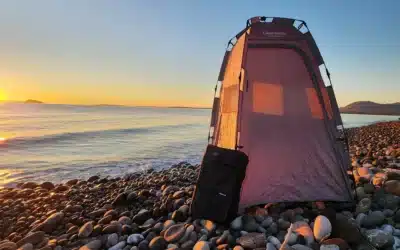
Cabin cruisers and pontoon boats with more room: A folding portable toilet like the GO Anywhere gives you a full-height, stable seat that locks into place even with some boat movement. It folds down to a compact size for storage when you’re not using it.
Overnight and multi-day trips: Pack enough WAG Bag kits for the full trip rather than relying on the marina having pump-out access when you need it. Each kit is sealed individually, so there’s no odor buildup between uses like there can be with a holding tank that’s filling up over several days.
What to Look for in a Boat-Ready Portable Toilet
Not every portable toilet is built for a moving deck. A few things matter more on the water than they do at a campsite:
- Stability on an uneven surface. Locking legs that won’t shift with boat wobble matter more here than on solid ground.
- A sealed, puncture-resistant disposal bag. Waste needs to stay contained through dock walks, coolers, and rough water — not just sit in an open bucket.
- Odor control that works in heat. A closed cabin or console locker gets hot fast; a gelling agent that neutralizes odor on contact keeps that from becoming a problem.
- Compact storage. On a boat, every cubic foot matters. A toilet that folds flat is worth more than one that doesn’t.
Cleanwaste’s GO Anywhere Portable Toilet and Original WAG Bag kits are built around this exact list — the toilet folds to a compact size and supports up to 500 pounds on three locking legs, and each WAG Bag kit uses a NASA-developed gelling powder that locks in odor and breaks down waste, made in the USA.
Frequently Asked Questions
No. Portable toilets aren’t classified as installed marine sanitation devices, so they don’t require Coast Guard certification, a permit, or an inspection. You can carry one on almost any recreational boat without restriction.
No. Sealed waste bags should never go overboard — they’re meant for disposal in a regular trash receptacle on shore. Discharging any waste within 3 miles of shore, in the Great Lakes, or in a No Discharge Zone is illegal regardless of the toilet type.
It depends on your state. Florida requires a toilet on any boat 26 feet or longer with an enclosed cabin and sleeping space. Federal law itself doesn’t set a size requirement — it only regulates toilets once one is installed.
Yes, if you pack enough waste bag kits for the trip. Each Original WAG Bag kit handles multiple uses and seals individually, so there’s no need for a pump-out station or holding tank on a standard weekend trip.
Ready to Set Up Your Boat’s Bathroom the Simple Way?
No plumbing, no hull modifications, no pump-out schedule to track — just a compact toilet and sealed bags that go straight into the trash when you’re done. Whether you’re running a center console for the day or taking a cabin cruiser out for the weekend, the GO Anywhere system packs down small enough to stay out of the way until you need it.
Shop the GO Anywhere Portable Toilet and Original WAG Bag kits at cleanwaste.com.